Untethered Ocean
Explainers on ocean robotics.
Posts
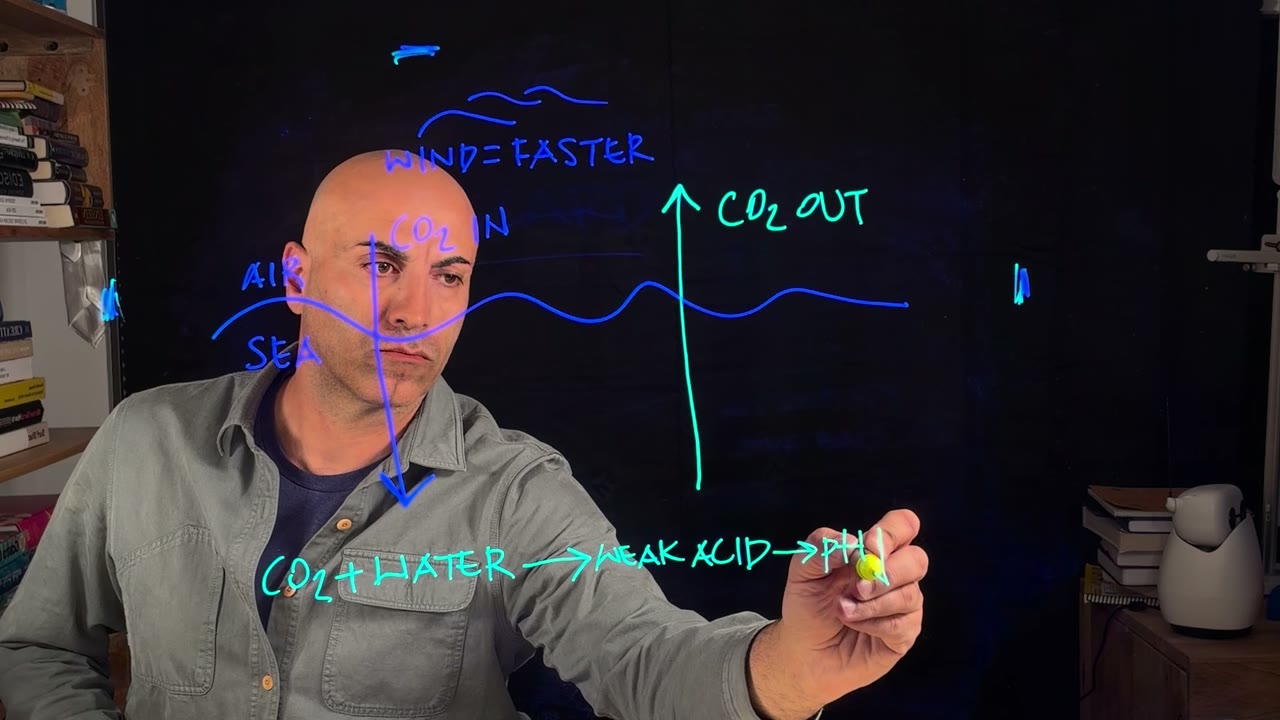 Can a Robot With No Ship Track the Ocean's Carbon? Autosub Long Range, ExplainedA robot sub spent five weeks at sea with no ship and took nearly 50,000 pH readings. On average the sea was taking in carbon dioxide, but when the sea and the air were close to balance, a tiny pH difference could blur the answer.
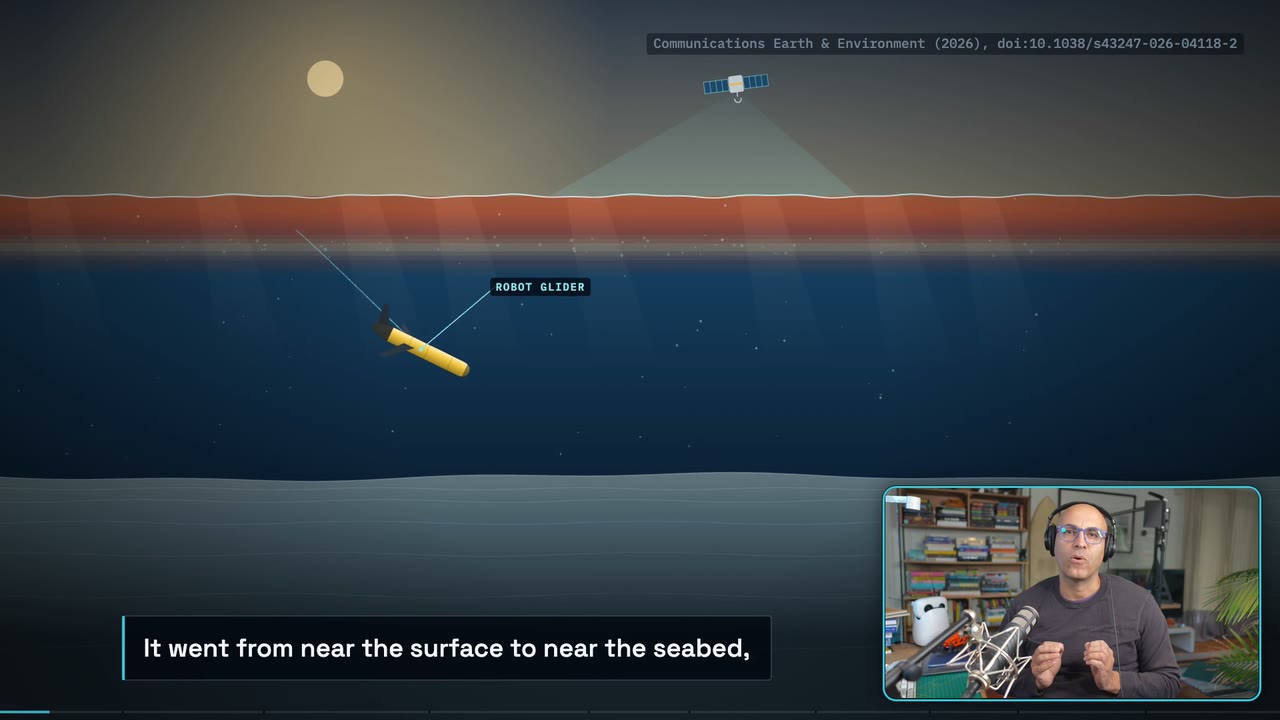 What Happened Under the Surface of the 2023 North Sea Heatwave? A Glider Study, ExplainedIn June 2023, the sea off eastern Scotland had its most severe marine heatwave in 30 years of records. Satellites saw surface chlorophyll spike briefly. Below, a glider found a hidden layer's chlorophyll rose and stayed up for about a week.
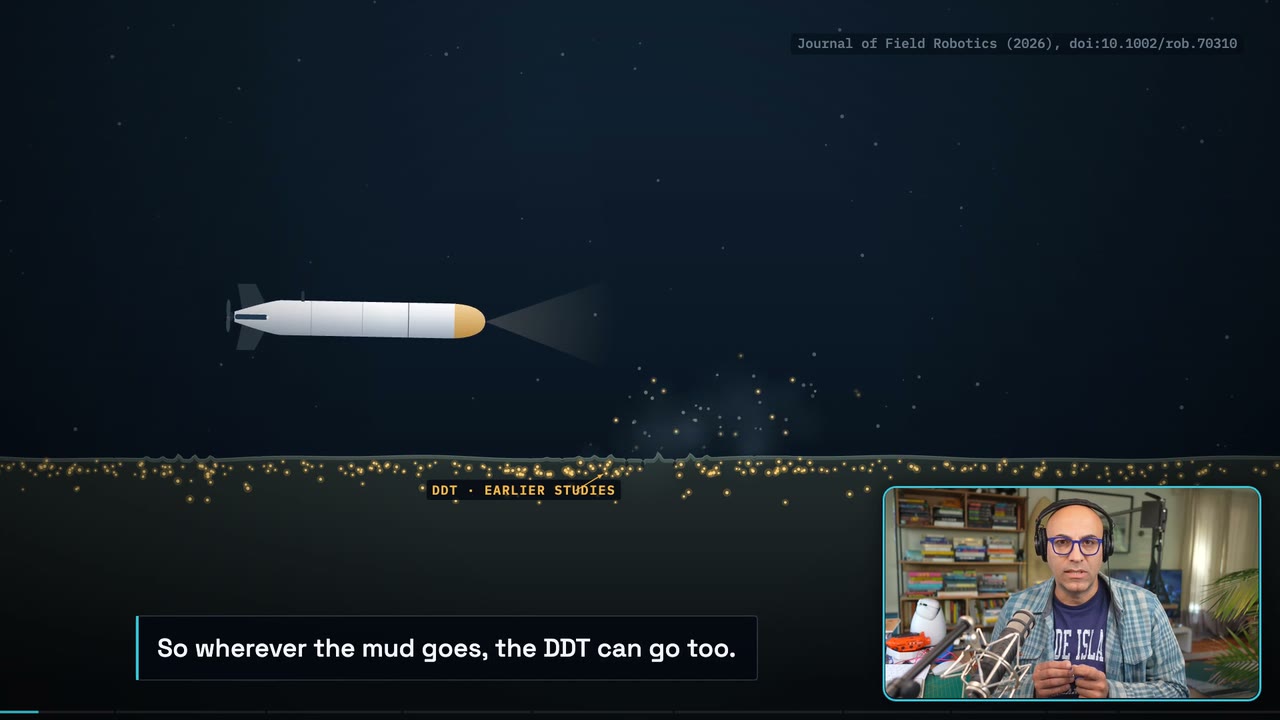 How An Underwater Robot Maps the DDT Pesticide Dumpsites Off Los AngelesOff Los Angeles, earlier studies found DDT in the mud at two old dumpsites. Researchers at Scripps mapped the seafloor there with an AUV's sonar, and the authors read its rough, burrowed mud as more likely to be stirred up.
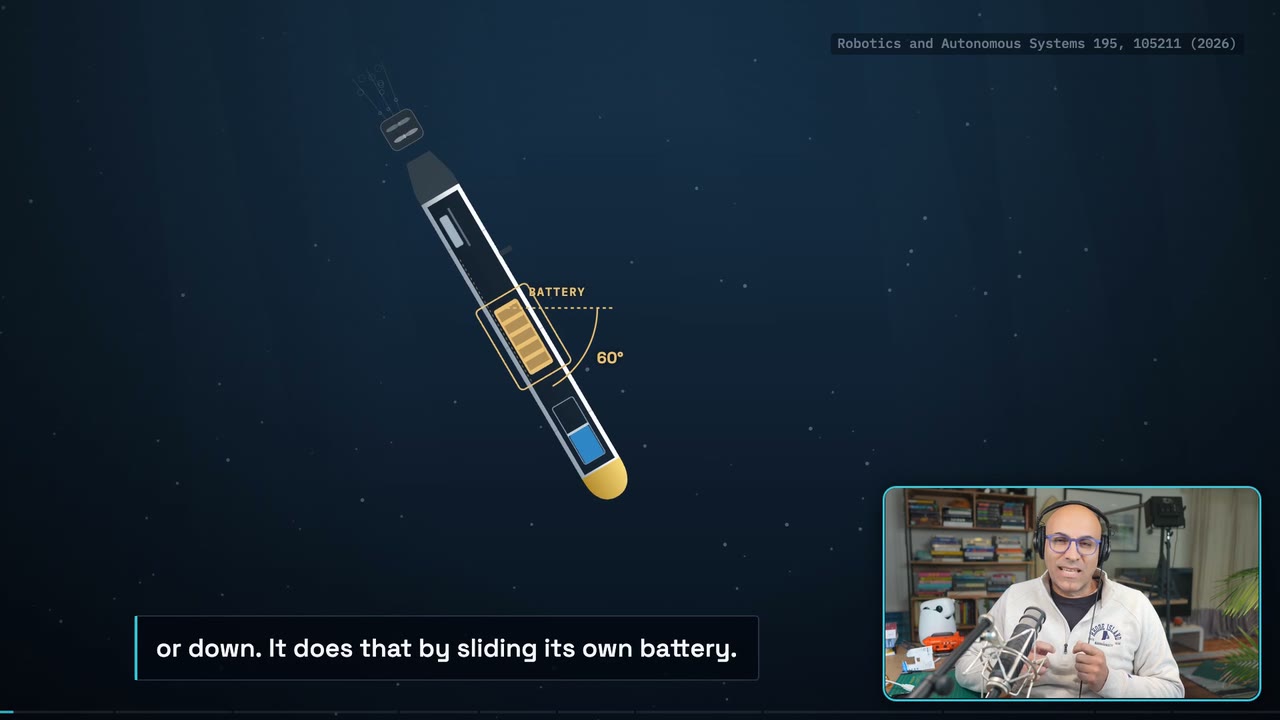 Can an Underwater Robot Learn How the Water Pushes It? Agile AUVs ExplainedSAM, an underwater robot, can tip its nose 60° by sliding its own battery. Researchers at KTH and MBARI kept the physics they trust and let a model learn the rest, mostly drag, from a few seconds of the robot's own data.
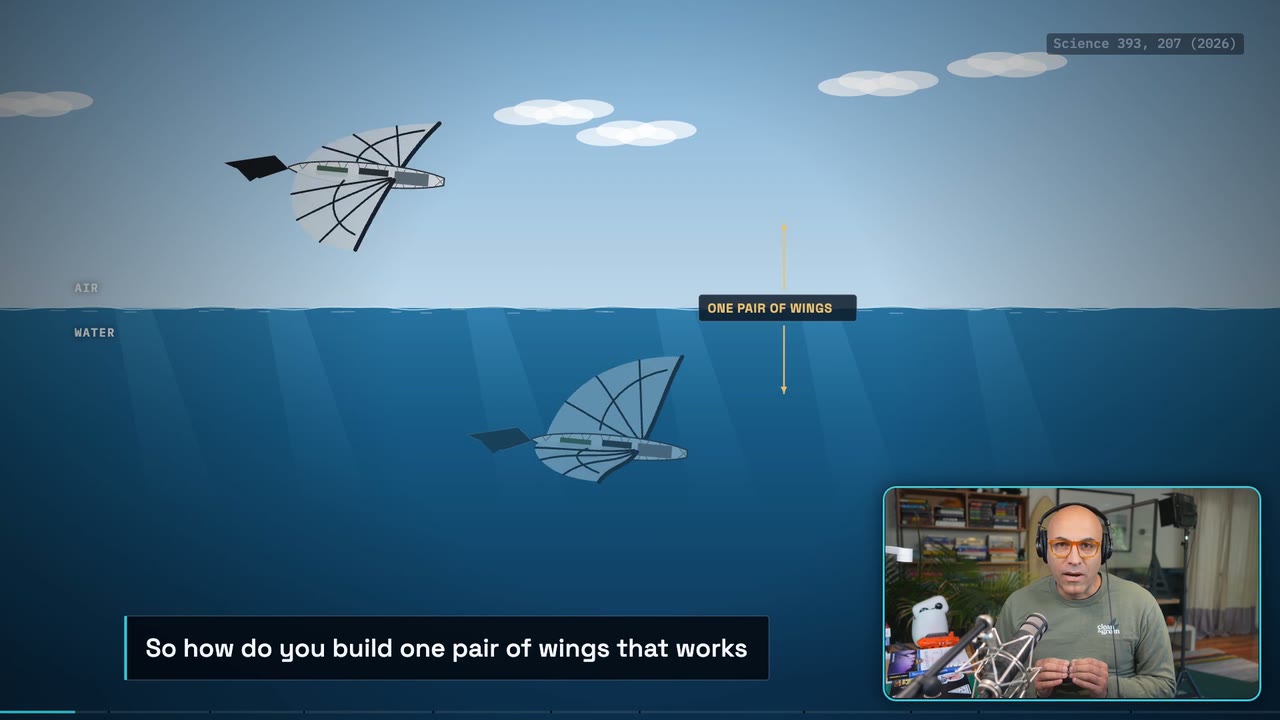 Can a Robot Fly Out of the Water on Wings Alone? Swim-and-Fly Robots ExplainedA puffin flies through the air and underwater with the same wings. Researchers built a 250-gram robot with two flexible flapping wings, no propeller and no legs, and in a lake in Switzerland it flapped its way out of the water and flew.
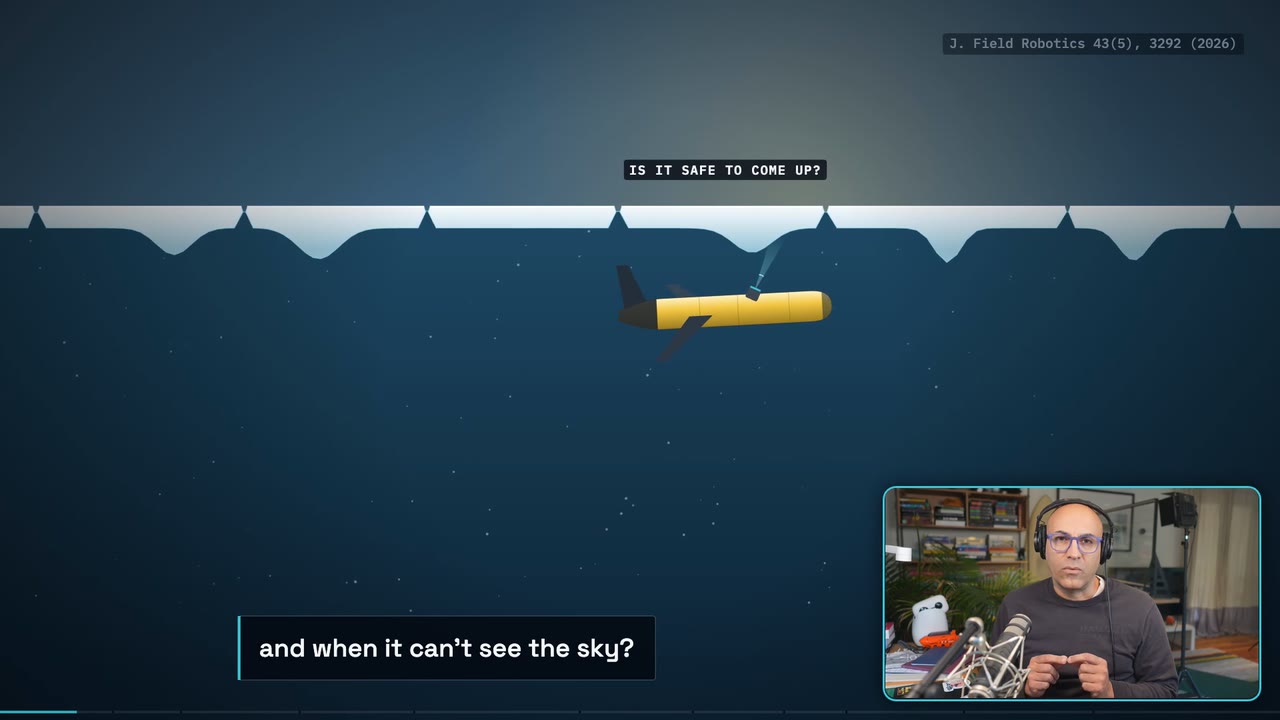 How a Robot Glider Avoids Hitting Sea Ice | Under-Ice Gliders ExplainedA robot glider under Antarctic sea ice has to come up for GPS, but ice overhead can get it stuck or damaged. Researchers gave their Slocum gliders a second computer, a "backseat driver," that decides when it's safe to come up.
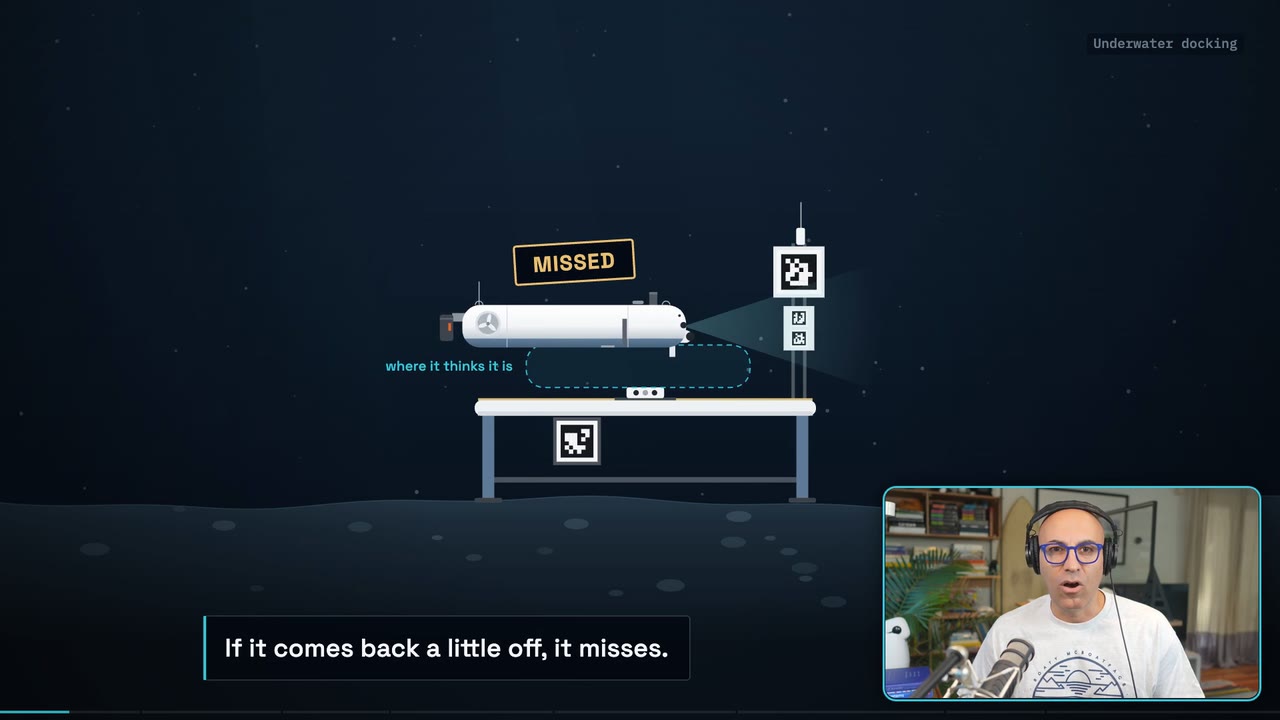 Parking an Underwater Robot That Can Barely See | Underwater Docking ExplainedHow an underwater robot finds its dock with only quick peeks at its markers, why averaging the sightings can't catch a mistake that's off the same way every time, and the idea we're proposing instead: beads on springs.
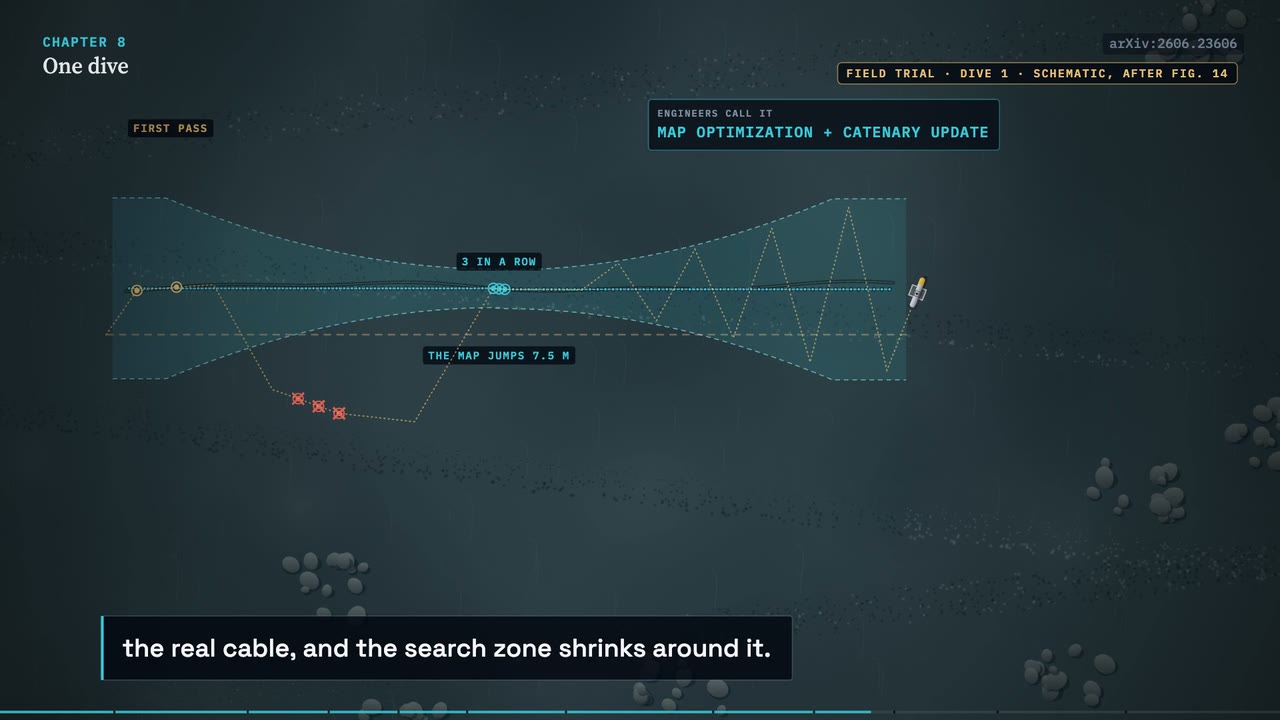 A Robot Sub Finds a Cable Its Map Got Wrong | Subsea Cable Tracking ExplainedThe maps of where seafloor cables lie can be off by many meters. Researchers gave their robot sub a map that was wrong on purpose. It found the cable anyway, followed it, and corrected its map along the way.
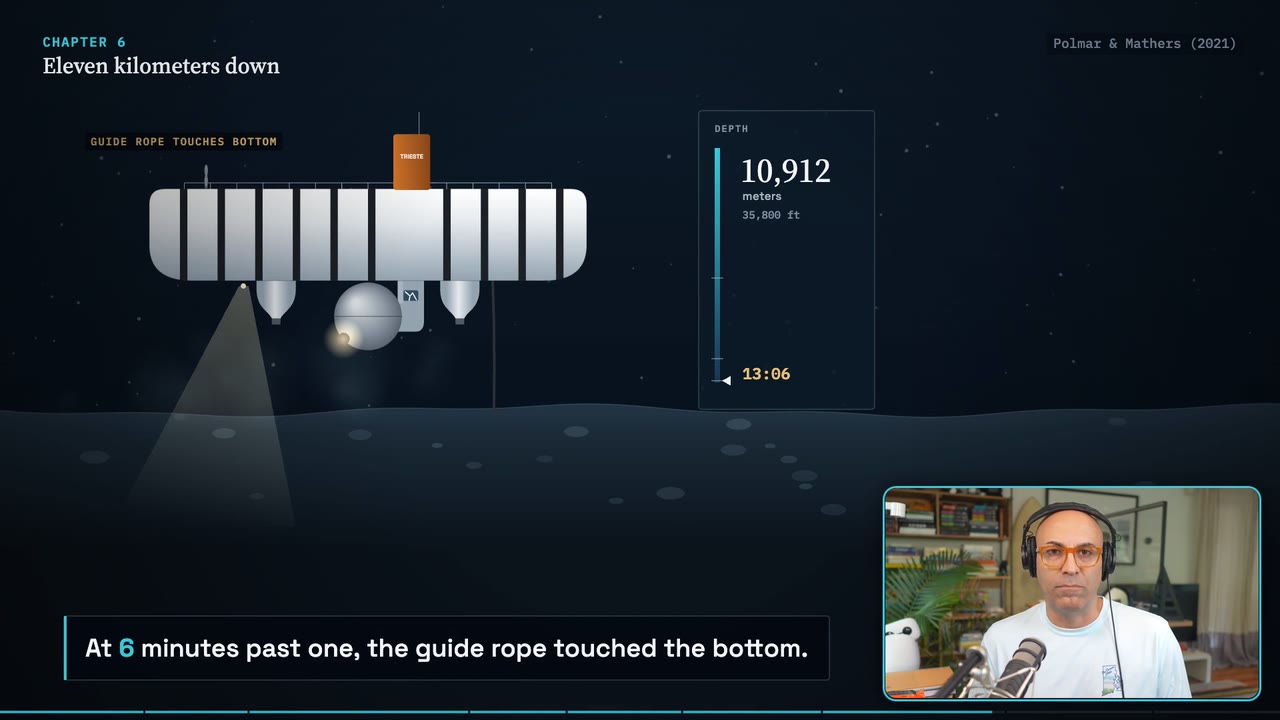 The Balloon That Sank to the Deepest Point in the OceanIn January 1960, Jacques Piccard and US Navy lieutenant Don Walsh sank almost 11 kilometers to the bottom of the Challenger Deep, the deepest point in the ocean. Their craft, the Trieste, was really a balloon built to sink.
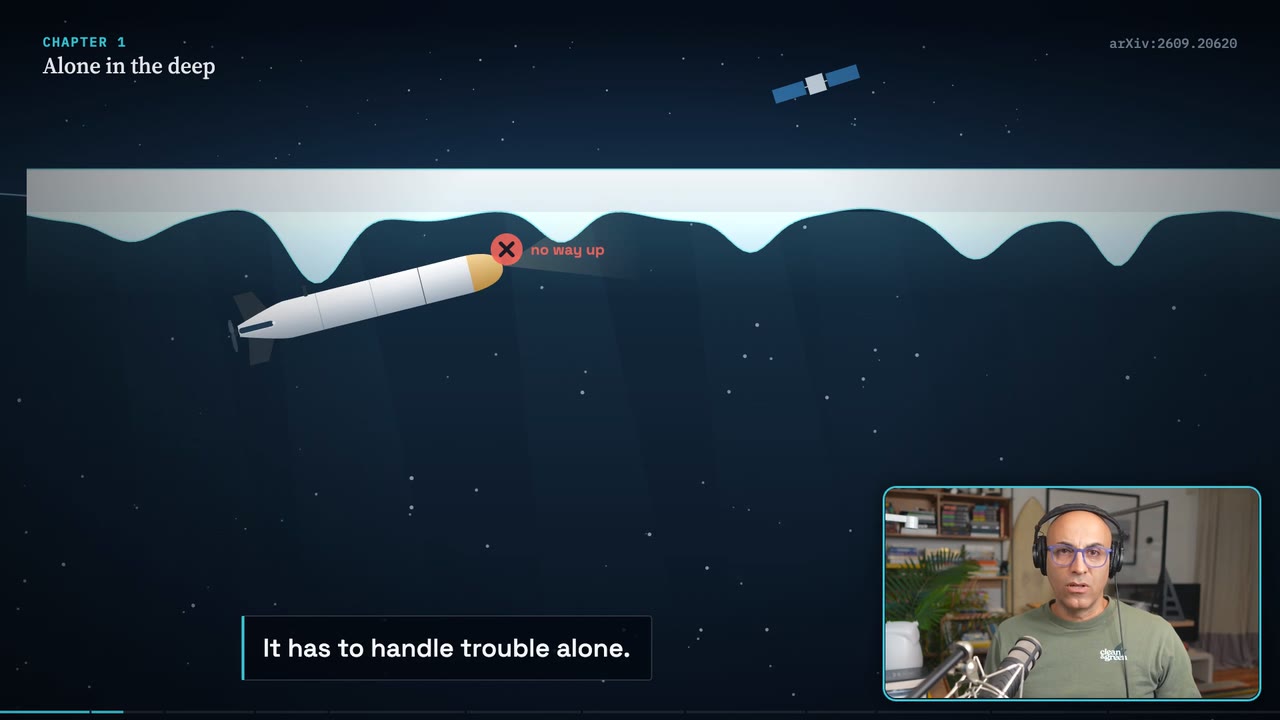 Can We Trust AI to Rescue a Robot Alone at Sea?When a robot sub's nose starts to drop under the ice, there's no human to call. Can an AI decide: keep going, or abort? Researchers at Johns Hopkins tested four AI models on exactly this, in 480 simulated trials.
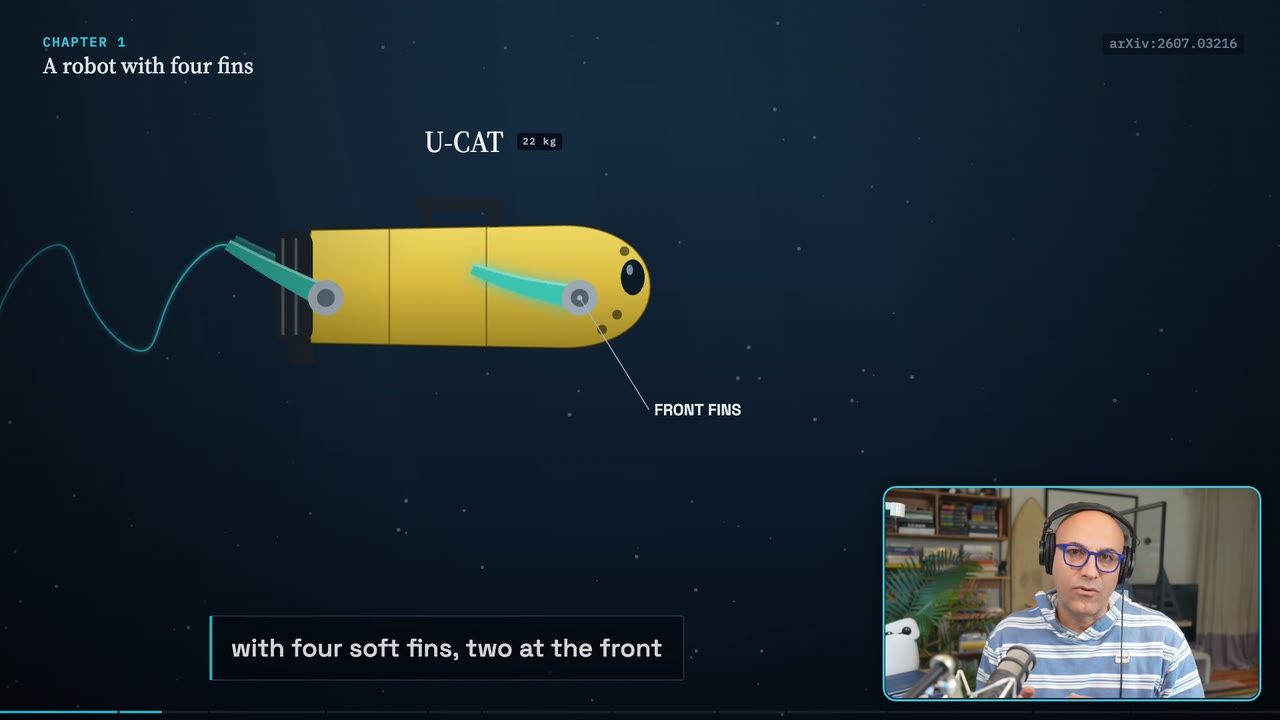 Can a Robot Save Power by Flapping to Nature's Rhythm?A tuna, a sea turtle and a lamprey swim to nearly the same rhythm when they cruise. Researchers at Tallinn University of Technology, VUB and IMEC gave a four-fin underwater robot, U-CAT, a controller that aims every fin at that rhythm.
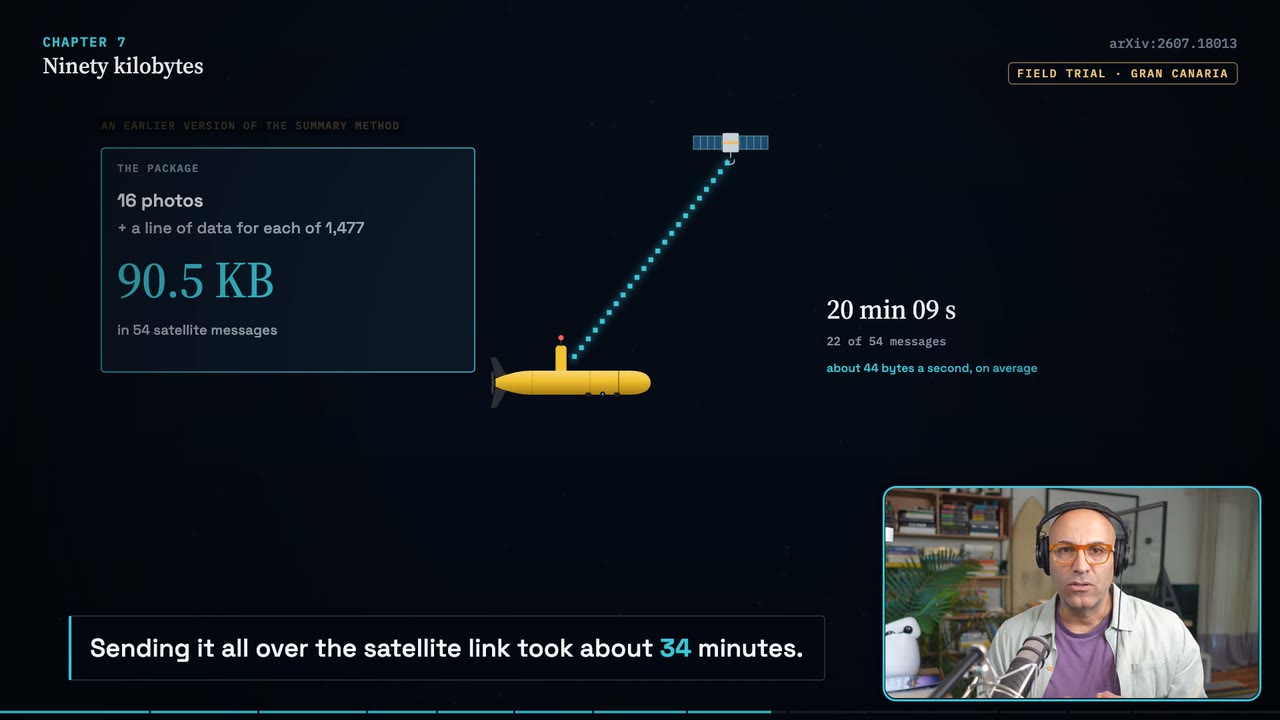 How Does a Robot Sub Decide Which 16 Photos to Send Home?Researchers at the University of Southampton, the National Oceanography Centre, Ocean Infinity and Voyis built a way for a robot sub to sort its own photos with a neural network and send home a summary.
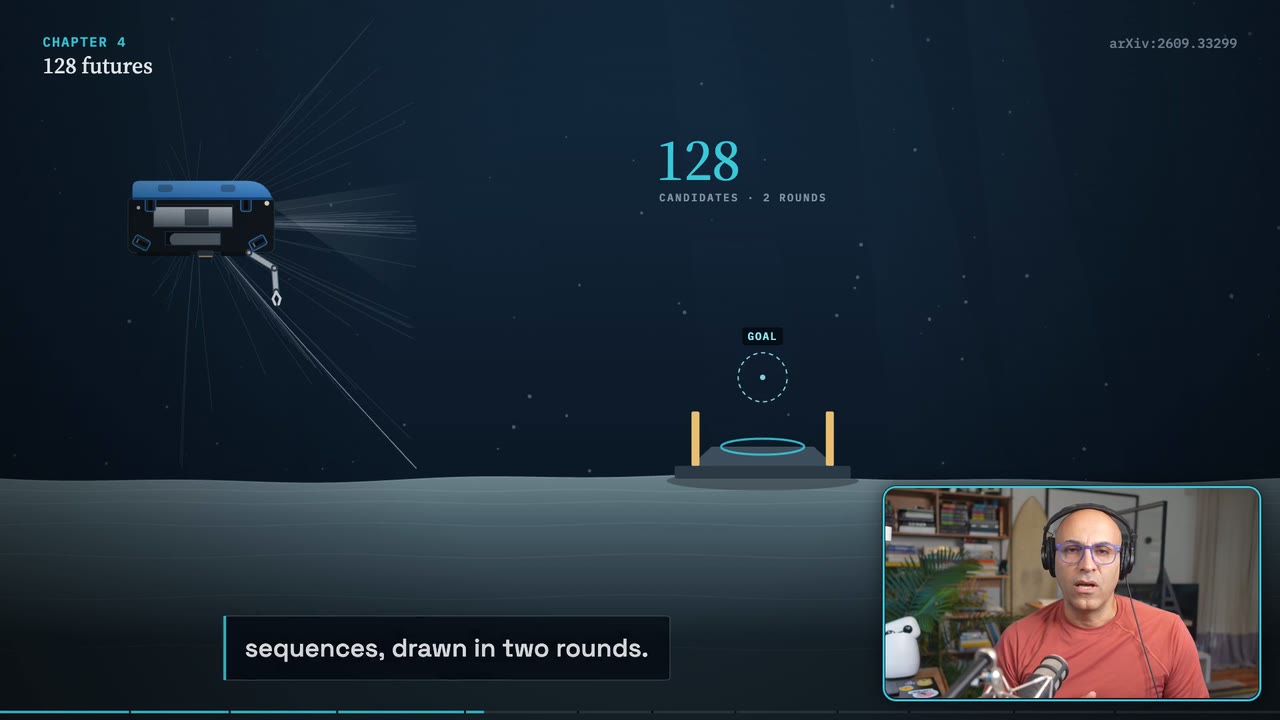 An Underwater Robot That Predicts Its Own Physics | AquaWAM ExplainedResearchers at Shandong University and the Beijing Institute of Technology built AquaWAM, a model that predicts the robot's own motion two seconds ahead, before every command, from its sensors rather than from camera images.
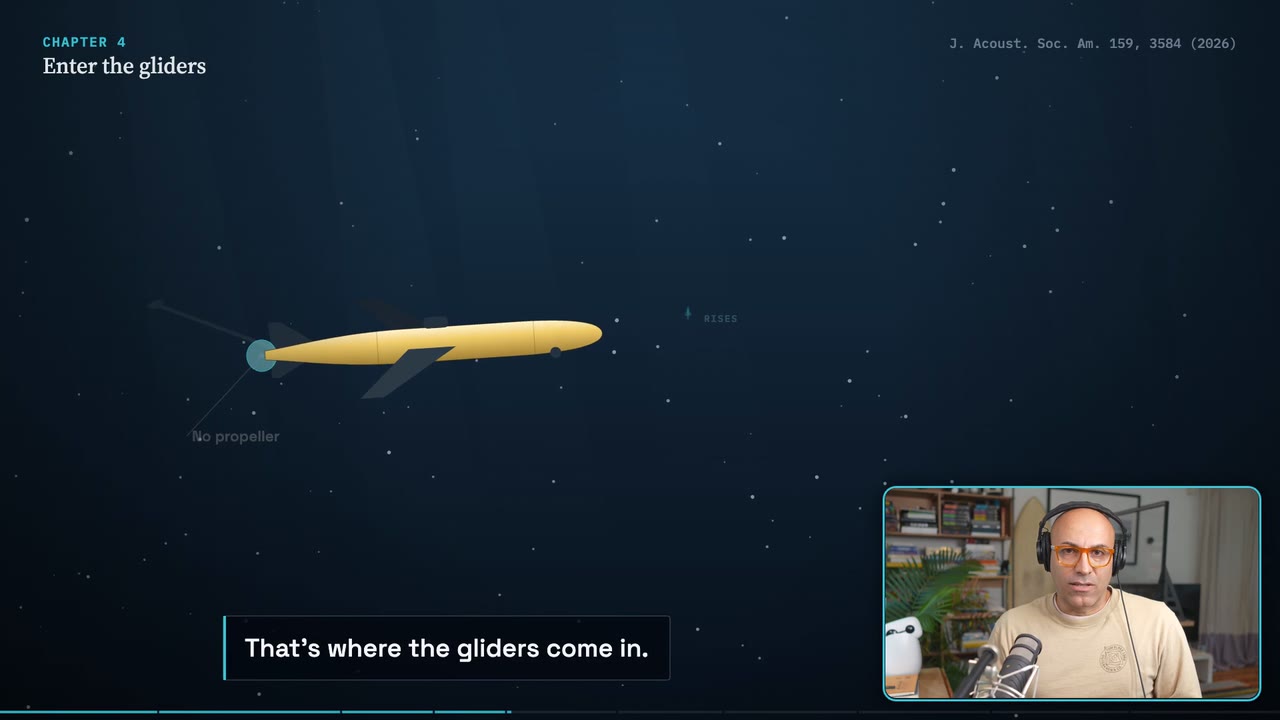 How Robot Gliders Map the Speed of Sound in the Canada BasinResearchers at the University of Rhode Island and the University of Washington flew two Seagliders through the Canada Basin in the summers of 2016 and 2017 to measure how the speed of sound varies in the upper ocean.
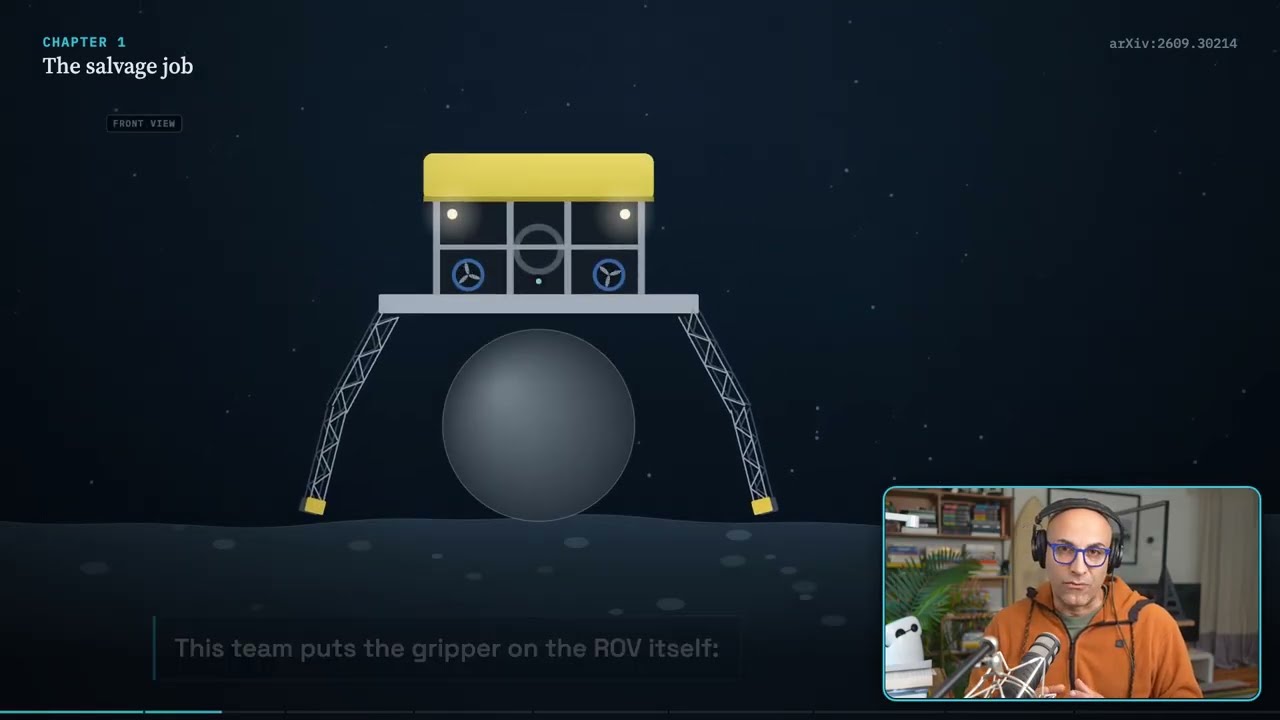 A World Model for Underwater Salvage: C3-JEPA ExplainedResearchers at Shanghai Jiao Tong University built C3-JEPA, a small world model that tracks the target and the gripper across an ROV's cameras and predicts how they'll move under the pilot's commands.